Free Keyword Research Tool
Find out what people are actually searching for.
Get free keyword suggestions with detailed monthly search volumes and free competition data.
What this keyword tool actually does
Type in any keyword and get a list of related searches people are making. Each result shows monthly search volume and how competitive it is.
Find keywords you didn't know existed
Search for "coffee maker" and you'll get dozens of variations like "best coffee maker under $50" or "coffee maker with grinder built in". These are actual phrases people type into Google. Pick the ones that match what your content is about.
See actual monthly search volumes
A keyword with 50,000 monthly searches sounds great until you realize it's dominated by huge brands. Meanwhile, a keyword with 800 searches might be perfect if your site can actually rank for it. The numbers help you decide, but they're not the whole story.
Check competition levels
High competition means lots of sites are fighting for that keyword. Low competition means fewer sites are targeting it—which usually means it's easier to rank. If you're starting out, go for the low-competition keywords first.
Target long-tail keywords
"Running shoes" gets millions of searches but is nearly impossible to rank for. "Running shoes for flat feet women" gets way fewer searches but is way easier to rank for—and the people searching for it know exactly what they want. Long-tail keywords convert better because the search intent is clearer.
Research different countries
Search volumes vary by country. "Trainers" is popular in the UK while "sneakers" dominates in the US. If you're targeting a specific country, make sure you're researching keywords for that location.
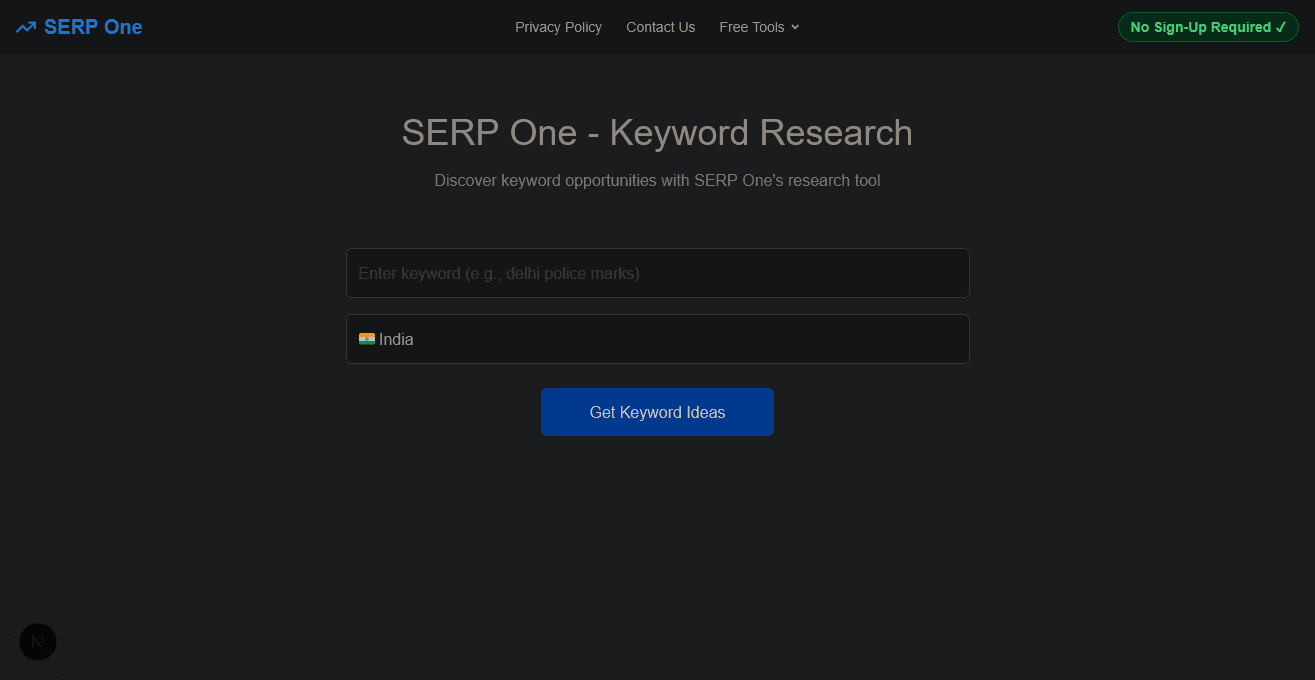
How to use this keyword research tool
Start with a seed keyword
Enter a broad topic related to your content. If you write about fitness, try "workout" or "weight loss". The tool will find related keywords from there.
Choose your target location
Select the country where your audience is searching. Keyword popularity changes by region, so pick the right one for your market.
Review the suggestions
Look through the list of keyword ideas. Each one shows monthly search volume and competition level. Sort by search volume or competition to find what works for you.
Pick keywords you can actually rank for
Don't just go for high search volume. A keyword with 1,000 monthly searches and low competition is better than one with 100,000 searches and high competition—unless you're already a big site with authority.
How to actually use these keywords
Finding keywords is pointless if you don't use them. Create content that actually answers the search query. If someone searches "how to fix a leaky faucet", they want step-by-step instructions—not a 2,000-word history of plumbing.
Put your main keyword in the page title, URL, and a few times in the content. Don't force it—write naturally. Google is smart enough to understand synonyms and related terms. "Running shoes" and "trainers for jogging" mean the same thing.
Focus on one main keyword per page. If you find 10 great keywords, that's 10 different pages or blog posts. Trying to rank for everything on one page doesn't work.
Come back and research new keywords regularly. Search trends change. What was popular six months ago might not be now. Keep your content updated based on current search behavior.